
Types of T-Shirt Prints: A Complete Guide
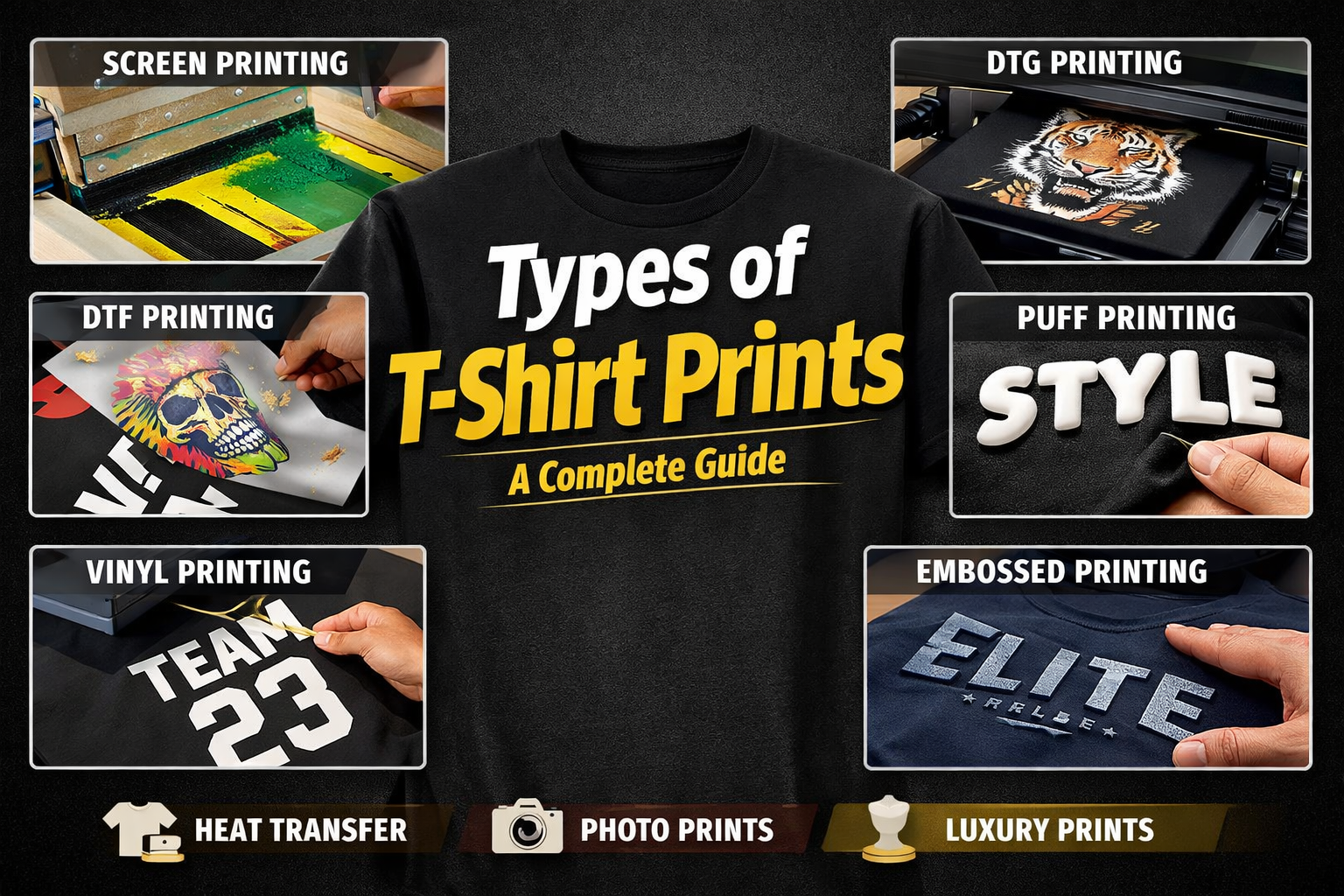
T-shirts are one of the most versatile pieces of clothing. From minimalist logos to bold graphic artwork, the printing method used on a T-shirt determines the look, durability, comfort, and cost of the garment. Whether you’re launching a fashion brand, creating merchandise, or printing custom apparel, understanding different types of T-shirt prints will help you choose the right technique.
In this guide, we’ll explore the most popular T-shirt printing methods used in the fashion and apparel industry.
1. Screen Printing
Screen printing is one of the most widely used T-shirt printing methods. In this process, ink is pushed through a mesh stencil onto the fabric.
Advantages
-
Highly durable prints
-
Vibrant colors
-
Ideal for bulk orders
-
Cost-effective for large quantities
Disadvantages
-
Expensive for small batches
-
Not suitable for complex multi-color gradients
Best for:
Brand merchandise, bulk orders, corporate T-shirts, and simple designs.
2. Direct-to-Garment (DTG) Printing
DTG printing works like an inkjet printer, but instead of paper, it prints directly onto fabric.
Advantages
-
Perfect for detailed artwork
-
Unlimited color combinations
-
Great for small quantities
Disadvantages
-
Higher cost per piece
-
Works best on cotton fabrics
Best for:
Photo prints, artwork designs, and small custom orders.
3. Direct-to-Film (DTF) Printing
DTF printing is gaining popularity in the apparel industry. The design is first printed onto a film and then transferred to the T-shirt using heat.
Advantages
-
Works on multiple fabrics
-
Vibrant color output
-
Durable prints
Disadvantages
-
Slightly thicker print feel
-
Requires heat transfer equipment
Best for:
Streetwear designs, colorful graphics, and custom fashion brands.
4. Heat Transfer Printing
Heat transfer printing uses heat and pressure to transfer designs from special transfer paper onto fabric.
Advantages
-
Good for small quantities
-
Easy customization
-
Ideal for quick production
Disadvantages
-
Less durable than screen printing
-
Prints may crack over time
Best for:
Promotional T-shirts and one-off custom designs.
5. Puff Printing
Puff printing creates a raised 3D effect on the design using special ink that expands when heated.
Advantages
-
Unique textured look
-
Premium streetwear aesthetic
-
Highly fashionable
Disadvantages
-
Limited design complexity
-
Slightly higher cost
Best for:
Streetwear brands and trendy fashion collections.
6. Embossed / Raised Printing
Embossed printing adds a 3D effect by raising certain elements of the design.
Advantages
-
Premium look
-
Distinct texture
-
Long-lasting design
Disadvantages
-
Higher production cost
-
Limited design flexibility
Best for:
Luxury apparel and premium brand collections.
7. Vinyl Printing (HTV)
Heat Transfer Vinyl (HTV) uses vinyl sheets cut into shapes and heat-pressed onto fabric.
Advantages
-
Sharp and clean designs
-
Excellent for typography and logos
-
Durable finish
Disadvantages
-
Not ideal for complex graphics
-
Time-consuming for large orders
Best for:
Sports jerseys, logo T-shirts, and typography-based designs.
The right printing method can elevate the quality, appearance, and longevity of your T-shirts. Whether you are a brand owner, business, or designer, understanding these printing techniques will help you create apparel that stands out.
At Raw Creatives, we help brands bring their ideas to life with high-quality custom apparel printing solutions designed for modern fashion and merchandise.